
Blogs · How-to
What to do after a monsoon: 6 immediate steps
Wait for the cell to pass. Stay off the roof. Photograph the damage from the ground. Then call your insurance company and call us, before the next storm finds the same hole. That order is the whole article.
By Evan Baker, owner · September 1, 2026 · 8 minute read
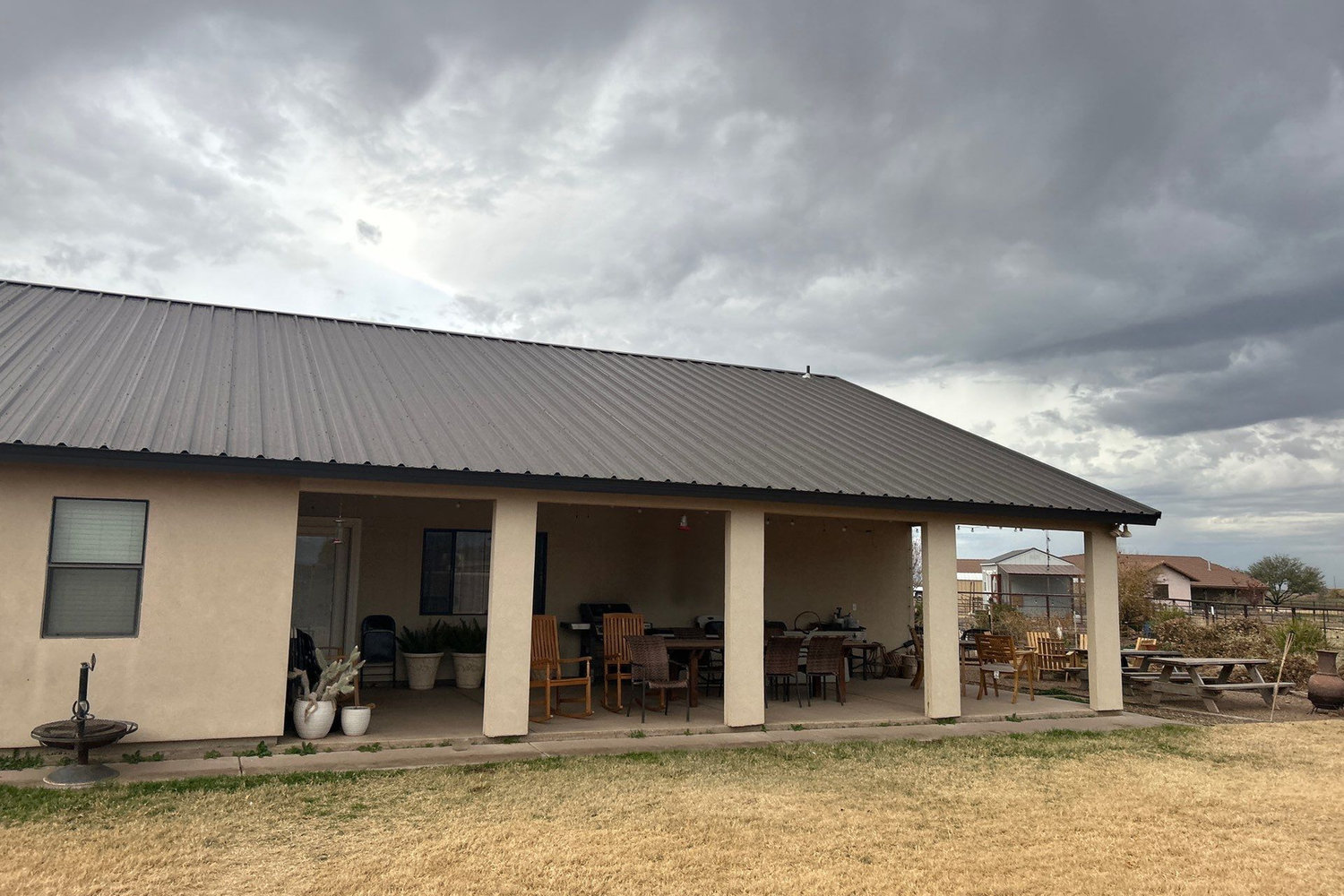
Step 1: Why should I wait until the storm clears?
Because a monsoon cell is still a thunderstorm. Lightning, wind, and a wet roof are how people get hurt. The leak will still be there in an hour. You might not be, if you climb in it.
Gila Valley cells, the ones that drop an inch of rain in twenty minutes on Safford, Thatcher, and Pima, look like they are over when the first street is already running. They are often not over. Rim Country cells stall on the Mogollon Rim and come back through Payson, Pine, and Strawberry the same afternoon. Give the sky twenty minutes of quiet before you even open the back door with a camera.
While you wait: put buckets under drips, pull rugs and furniture off the wet spot, and kill power to a room if water is near a fixture. That is useful work. Getting a ladder out of the shop is not.
Step 2: What should I check from inside the house?
Walk every room under the roof, including closets and the garage. New stains, active drips, and a damp attic smell tell us more than a wet shingle does. Write down where the water showed up, not just that it leaked.
Leaks rarely start where the stain is. Water runs along a rafter or a pipe and drips ten feet from the hole. That is why a ground-level photo of a ceiling stain is still worth taking: it is a map, not a diagnosis. If you can get into the attic without crawling a soaked board, look for daylight, wet insulation, and dripping at a penetration. If the attic feels unsafe, skip it. We will be in there on the inspection.
On flat and low-slope block homes in Safford, Thatcher, and Pima, check the rooms under parapets and cooler mounts. Ponding on those roofs finds the same scuppers every July. On a metal shop or barn, look at the interior under panel ends and ridge flashing. Those are the usual monsoon paths.
Step 3: What photos does my insurance company actually need?
Wide shots of each side of the house from the yard, close shots of anything you can see from the ground (lifted shingles, a bent panel, a downed limb), and every interior stain or drip. Date-stamped phone photos are fine. Do not climb for a better angle.
Carriers decide claims on evidence. A neighbor's "it hailed" is not evidence. A photo of granules in the gutter, a shingle in the driveway, or water on the insulation is. Take more pictures than you think you need, including the yard: that ponderosa limb, the trampoline that became a sail, the fence that tells the wind story.
Then stop. The on-roof documentation, every slope, every bruise, every flashing, is our job. We photograph it before you file so the claim is built on what is actually up there, not on an adjuster's drive-by. You keep those photos. They are yours.
Step 4: Should I get on the roof to tarp it?
Only if you can cover something from the ground without a ladder: a broken skylight you can reach from a safe deck, a window, a porch. A tarp on a wet slope is a roofer's job. Call (928) 951-2331 and we will tell you when a truck can be there.
A tarp is not a repair. It keeps tonight's rain out of the living room so the claim and the permanent fix can happen on a dry day. We never leave a deck open overnight on a job, and we do not want you improvising one after dark with a hardware-store tarp and roofing nails through a shingle.
If water is coming in now, catch it, move what you can, and call. Emergency tarping is dispatched by region: Gila Valley and Greenlee first from Thatcher, Rim Country and White Mountains on the routed days, with active leaks moved up the list. We will be honest about the clock. That is better than a promise we cannot keep.
Step 5: When do I call insurance, and when do I call a roofer?
Report the storm to your insurance company so the claim clock starts. Then call us to document the roof and tarp if needed. Do both the same day if you can. Do not wait for the adjuster to "just take a look" from the driveway.
We inspect and photograph everything, then meet your adjuster on the roof so nothing gets missed. We do not act as a public adjuster and we do not negotiate your policy. We also never waive, absorb, or "handle" your deductible. Contractors who offer that are committing insurance fraud, and they are usually the trucks with out-of-state plates that are gone before the first leak.
If the repair is clearly smaller than your deductible, we will tell you the repair price first so you can decide whether filing is even worth it. Filing a small claim can raise premiums for nothing. That is a decision you make with real numbers, not a sales script.
Step 6: What if another cell rolls through before the roof is fixed?
That is why step 6 is a phone call, not a wait-and-see. July through September in the valley, and storm weeks above the Rim, often stack cells two or three days in a row. An open hole does not get a week of sunshine to think about it.
Call (928) 951-2331 or request a free inspection. The Thatcher office calls back within 1 business hour, confirms the address, and puts you on the next regional route, or on an emergency tarp if water is still coming in. You get a written scope within two business days when the inspection is done. It does not expire tonight.
If you are a seasonal owner in Payson, Pinetop-Lakeside, or Show Low and you are not at the house, say so. We inspect with your permission, send the photos the same day, and walk you through them by phone. Nothing gets scheduled without your go-ahead.
How does monsoon damage differ from the valley to the Rim?
Same storm season, three different roofs. The Gila Valley fails at heat-baked flashing and ponding. Rim Country fails where needles dam a valley and wind lifts a tab. The White Mountains add hail-adjacent wind and, later, snowmelt through the same openings.
Gila Valley (Safford, Thatcher, Pima, about 2,900 feet): roof surfaces have been cooking above 110°F all summer. Sealant is brittle. Monsoon microbursts drive rain under loose flashing and into every bad scupper on a flat block home. Willcox, at 4,170 feet in the Sulphur Springs Valley, adds hail to that list.
Rim Country (Payson at 5,000 feet, Pine, Strawberry): ponderosa debris is already in the valleys before the rain starts. Water has nowhere to go, so it sits against the shingle and finds the eave. Wind on the Rim lifts ridge caps that a valley storm might have left alone.
White Mountains (Show Low at 6,400 feet, Heber-Overgaard, Pinetop-Lakeside at 7,000 feet): monsoon here is wind and a cold rain on a roof that still has to carry snow in January. A fastener that backed out in August is an ice-dam leak in February. If you are reading this in September, walk the warning signs in our snow-load note before the first accumulation.
Questions we hear after the first cell
Monsoon roof FAQs
Should I get on the roof after a monsoon?
How fast can Big Buckle tarp a leaking roof?
Will insurance cover monsoon roof damage?
Can a contractor waive my deductible after a storm?
Do you come out after a storm in Duncan, Pine, or Tonto Basin?
What if the inspection says the roof was already worn out?
Call before the next cell.
Free inspection, photos of what we find, and a written scope. Emergency tarping quoted by phone at (928) 951-2331.