Blogs · Materials
Shingle or metal: what elevation actually decides
A roof that is correct in Thatcher at 2,950 feet is the wrong spec in Pinetop at 7,000. Here is how we decide between architectural shingle and metal across three climates, with the published numbers we already put on the metal and replacement pages.
By Evan Baker, owner · August 28, 2026 · 8 minute read
What is the short answer?
In the valley both work; metal wins on heat and lifespan, shingle on price. Under pines and above the Rim, metal sheds snow and needles and is what we would put on our own house. If you will own the home 15-plus years, we usually show you both numbers and let the elevation do the talking.
Elevation changes what a roof needs. Tonto Basin at 2,300 feet and Pinetop-Lakeside at 7,000 feet face very different conditions. When a quote arrives without asking where the house sits, that is the tell.
Architectural shingle is a fine roof in all three places if it is installed for the place. It just lasts a different number of years in each, and it asks for different detailing: ventilation in the valley, ice-and-water and open valleys under the Rim, six nails and hand-sealed tabs in the mountains.
What belongs on a Gila Valley roof?
Safford, Thatcher, and Pima sit around 2,850 to 2,950 feet. Summer roof-surface temperatures run above 110°F, often above 150°F on a dark shingle. Monsoon cells drop an inch in twenty minutes and find every bad flashing and scupper.
Architectural shingle with real ridge and intake ventilation is the value choice here: 20 to 25 years for a quality laminate, less for three-tab. Light colors and a vented attic matter as much as the shingle brand. Most 1970s–1990s homes in Safford and Thatcher are on an original or once-recoated roof now; that is why we are on those streets.
Metal reflects a large share of that heat, especially in a cool-rated tan, gray, or light green. Pair it with ventilation and a valley attic can drop 20 to 30 degrees in July. Black metal looks sharp and we install it, but we tell you the tradeoff first. Flat and low-slope block homes are a different conversation: coatings and drainage on a sound deck, not a steep-slope shingle.
Willcox at 4,170 feet in the Sulphur Springs Valley adds hail. Class 4 impact-rated shingle or metal is the conversation after a hail week, not a cosmetic upgrade.
What belongs under the Rim?
Payson at 5,000 feet, Pine at 5,400, Strawberry at 6,000. Pine needles dam closed-cut valleys. Freeze-thaw puts ice at the eaves. Most 1990s roofs were built without ice-and-water shield. Payson is Firewise territory.
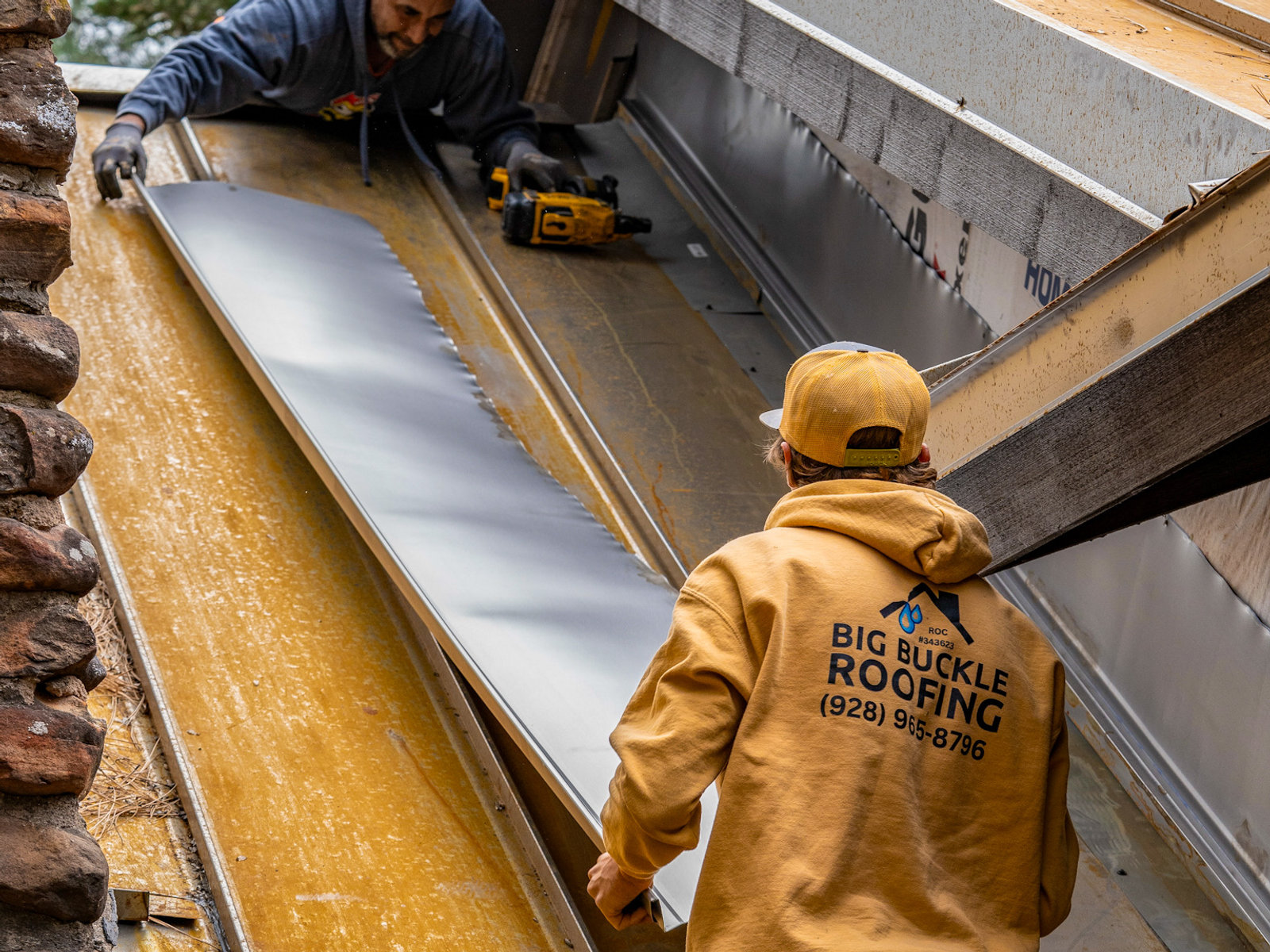
Metal sheds needles and snow, resists embers, and lasts 40-plus years. For a cabin in Alpine Heights or off Houston Mesa Road with mature ponderosa overhead, it is what we would put on our own house. Open metal valleys keep debris from sitting wet against the roof.
Shingle still works if you accept more maintenance: valley cleaning, ice-and-water at eaves and valleys on a replacement, Class A material, and screened vents. Chaparral Pines and The Rim Club review color and profile. We file the packet. The Town of Payson requires a permit either way.
What belongs in the White Mountains?
Show Low at 6,400 feet, Heber-Overgaard at 6,600, Pinetop-Lakeside at 7,000. Real snow for weeks, wind that lifts ridge caps, and meltwater that refreezes at every eave. This is a mountain spec, not a Phoenix one.
Metal slides snow before it can dam when clip spacing and fastening are snow-rated. Ice-and-water goes at eaves and valleys. Snow guards go above entries so a slide does not land on the porch or the gas meter. Standing seam is the cleaner snow path on a home; exposed fastener belongs on shops and barns if you accept gasket work around year 15 to 20.
Shingle here needs six nails per shingle, hand-sealed tabs in cold installs, and ice-and-water across eaves and valleys. It is a legitimate roof. It just works harder every winter than the same shingle in Thatcher, and it fails mechanically (wind, load, freeze-thaw) more than it fails from heat.
What do the published numbers actually say?
For a typical 1,800 sq ft home, most shingle replacements land between $12,200 and $16,900, tile between $13,500 and $21,600, and metal between $23,600 and $43,100. On 15-year financing at 8.99% APR that is roughly $123–$171 a month for shingle and $239–$437 for metal. Mountain towns run toward the top for snow detailing and drive time.
What moves the number: pitch, layers to tear off, decking, valleys and dormers, panel profile (standing seam costs more than exposed fastener), and elevation detailing. Your written scope is a fixed line-item price after a free inspection. The ranges on this page are education, not a quote.
If you will sell in under ten years, shingle usually wins on cash. If you will stay 15-plus years under pines or snow, metal usually costs less per year. We put both on the same sheet and leave it on your table.
When is metal the wrong call?
Very cut-up roofs where trim costs balloon. Tight HOA palettes that will not approve the profile. A homeowner who will sell before the premium comes back. And a metal roof installed by a crew that fastens through the rib, skips closures, or uses the wrong sealant: that roof leaks at year three at every screw.
Metal is a system. Ask to see a job the company did five winters ago. Ours start on the Brand Map. Then get the inspection. Schedule it or call (928) 951-2331. For the long version of heat, snow, and failure points, read the Arizona metal roofing guide.
The questions that decide the material
Shingle vs metal FAQs
Shingle or metal for my elevation?
How much does a metal roof cost in Arizona?
Is a metal roof loud in the rain?
Does metal need HOA approval?
Can you install metal over my existing shingles?
Get both numbers on one sheet.
Free inspection, photos, shingle and metal side by side. It does not expire tonight.